
Imagine this: You’ve found your dream home in Austin, Texas. After weeks of searching, you finally submit an offer — and it gets accepted. Thrilled, you hand over a $10,000 earnest money deposit to show the seller you’re serious. But then, two weeks later, the home inspection reveals a cracked foundation and $40,000 in structural repairs. You want out. The big question now is: Can you get your earnest money back?
The answer isn’t always simple — and it depends on a lot more than most first-time homebuyers realize.
An earnest money deposit (sometimes called a good faith deposit) is one of the most important — and misunderstood — parts of buying a home in the United States. It signals to the seller that you’re a committed buyer, but it also puts your own cash at risk if you don’t navigate the process carefully.
In this complete homebuyer’s guide, we’ll break down exactly what an earnest money deposit is, how much you should expect to pay, when it’s refundable, and most importantly — can you get earnest money back if the deal falls through? Whether you’re a first-time buyer or a seasoned real estate investor, this guide will give you the clarity and confidence you need to protect your money at every step of the homebuying journey.
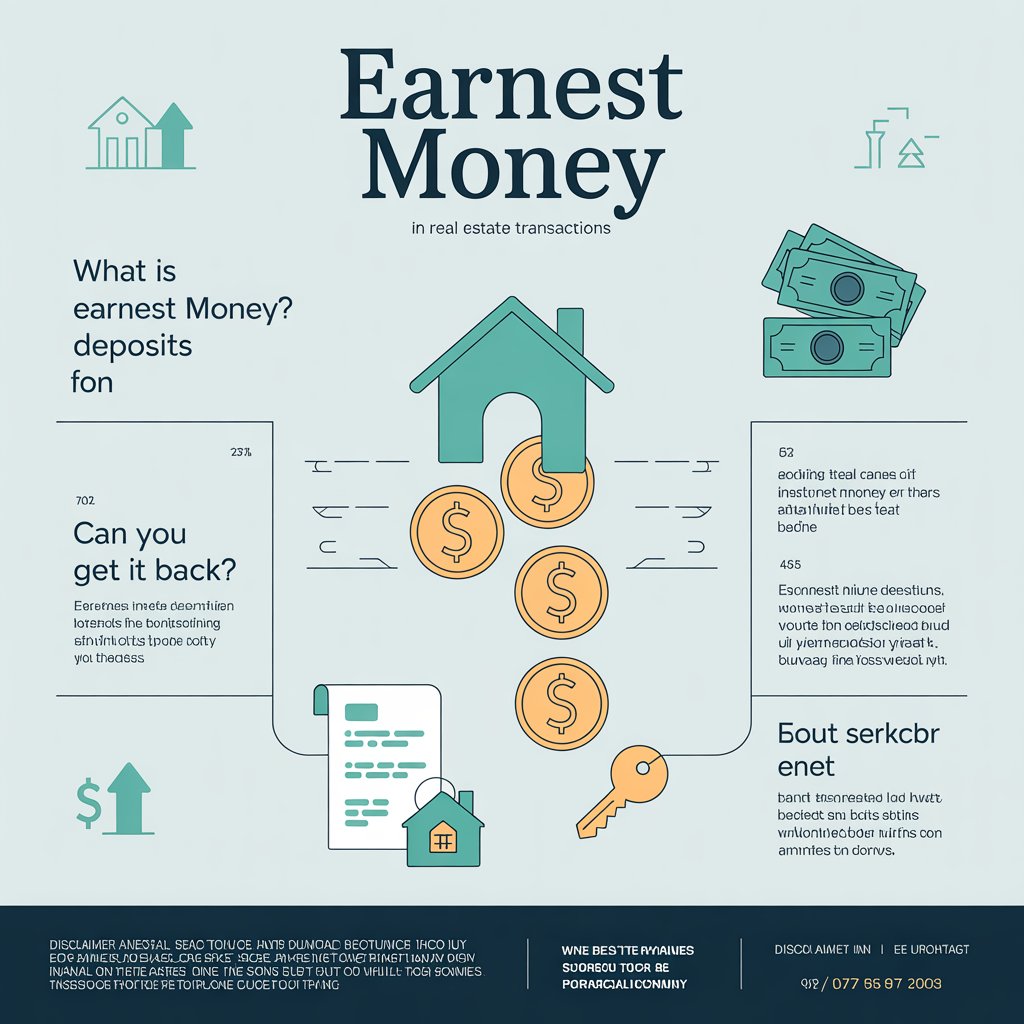
What Is an Earnest Money Deposit?
An earnest money deposit (EMD) is a sum of money that a buyer submits alongside an offer to purchase a home. It serves as a tangible demonstration of the buyer’s seriousness and commitment to completing the transaction. In real estate, it’s often referred to as a good faith deposit — because it literally represents the buyer’s “good faith” intention to follow through with the purchase.
Why Does Earnest Money Exist?
When a seller accepts your offer, they take their home off the market. That means they stop showing it to other potential buyers, pause any ongoing negotiations, and begin investing time and resources into the closing process. The earnest money deposit acts as a form of protection for the seller. If the buyer walks away without a valid, contract-covered reason, the seller may be entitled to keep the deposit as compensation for the lost time and missed opportunities.
How It Differs from a Down Payment and Closing Costs
Many buyers confuse earnest money with a down payment or closing costs, but they serve different purposes:
- Earnest money is paid when your offer is accepted and held in escrow until closing.
- Down payment is paid at closing and represents the portion of the home’s purchase price you’re paying upfront (not financed through a mortgage).
- Closing costs are the fees and expenses associated with finalizing the mortgage and transfer of ownership (e.g., title insurance, appraisal fees, attorney fees).
The good news? If the sale goes through, your earnest money is typically credited toward your down payment or closing costs — it doesn’t disappear.
How Much Is Earnest Money?
In the US housing market, a typical earnest money deposit ranges from 1% to 3% of the purchase price. For example:
| Home Price | Earnest Money (1%) | Earnest Money (3%) |
|---|---|---|
| $300,000 | $3,000 | $9,000 |
| $500,000 | $5,000 | $15,000 |
| $750,000 | $7,500 | $22,500 |
However, in a competitive housing market, buyers sometimes offer higher earnest money deposits — sometimes 5% or more — to make their offer stand out in a bidding war. In slower markets, you might get away with a smaller deposit or even negotiate below 1%.
How Earnest Money Works in the Homebuying Process
Understanding the flow of earnest money from start to finish helps demystify the process and reduces anxiety about where your money goes. Here’s a step-by-step breakdown:
The Earnest Money Timeline
- You submit an offer on a home, including your proposed earnest money amount in the real estate purchase agreement.
- The seller accepts your offer, and both parties sign the contract.
- You deliver the earnest money deposit — usually within 1 to 3 business days of contract acceptance. This is typically done via personal check, cashier’s check, or wire transfer.
- The funds are deposited into an escrow account held by a neutral third party — usually a title company trust account, a third-party escrow company, or a real estate broker’s trust account. The money is never given directly to the seller.
- The homebuying process continues — inspections, appraisal, loan underwriting, etc.
- At closing, the earnest money is applied toward your down payment or closing costs. If the deal falls through, the funds are either returned to you or retained by the seller, depending on the terms of the contract and applicable contingencies.
Where Is Earnest Money Held?
This is a critical point: your earnest money should always be held by a neutral third party. Acceptable holders include:
- A third-party escrow company
- A title company trust account
- A real estate brokerage’s trust or escrow account
- In some states, a real estate attorney’s trust account
⚠️ Never wire or hand your earnest money directly to the seller. This is a major red flag and leaves you with virtually no protection if something goes wrong.
Always Get a Receipt
When you submit your earnest money deposit, always request and keep a detailed receipt. This receipt should include the amount, date, payee (escrow holder), and property address. It’s your proof of payment and may be essential if a earnest money dispute ever arises.
Can You Get Your Earnest Money Back?
This is the question every homebuyer wants answered: Can you get earnest money back?
The short answer is: Yes — but only under certain conditions.
Whether you receive an earnest money refund depends almost entirely on the contingencies written into your purchase agreement and whether you follow the contract’s timelines and procedures to the letter.
When Earnest Money IS Refundable
Your earnest money deposit is typically refundable if you back out of the deal for a reason that is explicitly covered by a contingency in your contract. Common refundable scenarios include:
- Home inspection reveals major defects: If the home inspection contingency is in place and the inspection uncovers serious problems — a failing roof, mold, structural damage — you can usually request repairs, renegotiate the price, or walk away entirely and get your deposit back.
- Financing falls through: If your financing contingency (also called a mortgage contingency) is active and your lender denies your loan application, you’re generally entitled to a full refund of your earnest money.
- Appraisal comes in low: If the appraisal contingency is included and the home appraises for less than your offer price, and the seller won’t lower the price or you can’t cover the gap, you can typically exit the contract and recover your deposit.
- Your current home doesn’t sell: If you included a sale of current home contingency and your existing home doesn’t sell within the agreed timeframe, you can back out and reclaim your earnest money.
- Title issues arise: If a title search reveals liens, ownership disputes, or other problems that the seller can’t resolve, you can usually terminate the contract and get your deposit back.
- Seller breaches the contract: If the seller fails to meet their obligations — for example, they refuse to make agreed-upon repairs or they can’t deliver clear title — you are typically entitled to a full refund.
When Earnest Money Is NOT Refundable
Unfortunately, there are several scenarios where you could forfeit earnest money entirely:
- You change your mind without a valid reason: If you simply get cold feet, find another house you like better, or decide you don’t want to move anymore — and none of your contingencies apply — the seller is generally entitled to keep your deposit.
- You miss contract deadlines: Real estate contracts have strict timelines. If you miss the deadline to complete your inspection, secure financing, or provide notice of termination, you may lose your right to a refund.
- You waive your contingencies: In a hot market, some buyers waive contingencies to make their offer more attractive. This is extremely risky — if something goes wrong, you have non-refundable earnest money and no contractual exit.
- You breach the contract: Failing to perform your obligations under the contract (e.g., not applying for your mortgage in good faith) can result in losing your deposit.
📌 Real-World Example: When a Buyer Got Their EMD Back
Sarah and Mike put $8,000 in earnest money on a $400,000 home in Denver. Their contract included a home inspection contingency with a 10-day deadline. On day 7, the inspection revealed $35,000 in needed foundation repairs. They submitted a repair request, the seller refused, and Sarah and Mike terminated the contract within the contingency window. They received their full $8,000 earnest money refund within two weeks.
📌 Real-World Example: When a Buyer Lost Their EMD
James offered $5,000 in earnest money on a condo in Miami. To beat out competing offers, he waived all contingencies. Two weeks later, his employer transferred him to a different city, and he no longer wanted the condo. Because he had waived all contingencies and had no contractual basis to terminate, the seller kept his entire $5,000 deposit.
Key Contingencies That Protect Your Deposit
Contingencies are contractual clauses that allow either party to back out of the deal under specific conditions without penalty. For buyers, contingencies are the single most powerful tool for protecting their earnest money deposit. Think of them as your safety nets.
Here are the most important real estate contract contingencies every homebuyer should understand:
🏠 Home Inspection Contingency
The home inspection contingency gives you the right to have the property professionally inspected within a specified timeframe (usually 7–14 days). If the inspection reveals problems you’re not comfortable with — and the seller won’t fix them or adjust the price — you can terminate the contract and get your earnest money back. This is one of the most commonly invoked contingencies and one of the most important to keep in your contract.
💰 Financing Contingency (Mortgage Contingency)
A financing contingency protects you if you’re unable to secure a mortgage loan. Even if you’re pre-approved, final loan approval depends on underwriting, which considers your financial situation at the time of closing. If your lender ultimately denies your loan — due to a change in employment, debt-to-income ratio issues, or other factors — this contingency allows you to exit the contract and receive your earnest money refund.
📊 Appraisal Contingency
Lenders require an appraisal to ensure the home is worth the amount they’re lending. If the appraisal contingency is in place and the home appraises for less than the agreed-upon price, you have the option to renegotiate with the seller, pay the difference out of pocket, or walk away and recover your deposit.
🏡 Sale-of-Home Contingency
If you need to sell your current home before you can afford the new one, a sale of current home contingency gives you a set period to close on your existing property. If your home doesn’t sell in time, you can terminate the new purchase agreement without losing your earnest money. Note: sellers are sometimes reluctant to accept offers with this contingency, especially in competitive markets.
⚠️ The Risks of Waiving Contingencies
In today’s competitive housing market, some buyers are tempted to waive contingencies to make their offer more attractive. While this strategy can help you win a bidding war, it comes with enormous financial risk. If you waive your inspection contingency and then discover $50,000 in hidden damage, you’re stuck — you either close on the home or forfeit earnest money. Always consult with your real estate agent and attorney before waiving any contingency.
Earnest Money vs. Down Payment: What’s the Difference?
One of the most common sources of confusion for homebuyers is the difference between earnest money vs down payment. While both involve money you pay in the homebuying process, they serve entirely different purposes and are paid at different times.
Here’s a clear side-by-side comparison:
| Aspect | Earnest Money Deposit | Down Payment |
|---|---|---|
| Purpose | Shows good faith and commitment | Reduces the loan amount you need |
| When Paid | Upon offer acceptance (within 1–3 days) | At closing day |
| Typical Amount | 1%–3% of purchase price | 3%–20%+ of purchase price |
| Who Holds It | Third-party escrow or title company | Paid to lender/seller at closing |
| Refundable? | Yes, under certain conditions | Never (it’s your equity in the home) |
| Applied To | Credited toward down payment or closing costs | Reduces loan principal |
| Required? | Not legally required, but expected | Required by most loan programs |
What About VA and USDA Loans?
Both VA loan earnest money and USDA loan earnest money follow the same basic principles as conventional loans. Even though VA and USDA loans require no down payment, buyers still typically submit an earnest money deposit to show the seller they’re serious. At closing, the earnest money can be applied toward closing costs and earnest money credits, since there’s no down payment to apply it to.
What Happens to Earnest Money at Closing?
If your home purchase goes smoothly and you make it to the closing table, here’s what happens to your earnest money deposit:
- It’s credited toward your costs. In most cases, your earnest money is applied to your down payment or closing costs. For example, if you’re putting $60,000 down and you already paid $10,000 in earnest money, you’d only need to bring $50,000 to closing (plus any remaining closing costs).
- The escrow agent releases the funds. The third-party escrow company or title company holding your deposit will transfer the funds according to the closing statement (also called the settlement statement or HUD-1/CD).
- If there’s excess, you get it back. In rare cases where your earnest money exceeds your total closing obligations, the surplus is returned to you.
- It’s documented on your Closing Disclosure. You’ll see your earnest money listed as a credit on the Closing Disclosure form provided by your lender at least three business days before closing.
Common Reasons Buyers Lose Their Earnest Money
Losing your earnest money deposit is every buyer’s nightmare — and it happens more often than you might think. Here are the most common reasons buyers forfeit earnest money:
- Backing out without a contingency-covered reason: Simply changing your mind, finding a “better” house, or getting nervous about the commitment doesn’t qualify for a refund.
- Missing critical deadlines: Every contingency has a deadline. If your inspection period ends on Day 10 and you don’t submit your termination notice until Day 11, you may have waived your right to a refund.
- Waiving all contingencies in a bidding war: In a hot market, waiving contingencies makes your offer competitive — but it also means you have zero protection if something goes wrong.
- Failing to act in good faith: If you don’t apply for your mortgage promptly or you deliberately sabotage your own loan approval, the seller may argue you breached the contract.
- Breach of contract: Any violation of the terms in the real estate purchase agreement — such as failing to provide required documentation or not cooperating with the closing process — can put your deposit at risk.
- Liquidated damages clause: Many contracts include a liquidated damages clause stating that if the buyer defaults, the seller is entitled to keep the earnest money as compensation. This is enforceable in most US states.
How to Protect Your Earnest Money Deposit
The good news is that losing your earnest money is largely preventable. Here are proven strategies to protect your earnest money deposit and maximize your chances of getting it back if you need to:
- Work with an experienced real estate agent. A knowledgeable agent will ensure your contract includes the right contingencies and that all deadlines are tracked and met.
- Never wire money directly to the seller. Always use a reputable third-party escrow company, title company, or attorney’s trust account.
- Read and understand every clause in the contract. Don’t sign anything you don’t fully understand. If something is unclear, ask your agent or a real estate attorney.
- Keep all contingencies in place unless you fully understand the risks of waiving them — and are financially prepared to absorb the loss.
- Track every deadline meticulously. Use a calendar, spreadsheet, or your agent’s transaction management system to ensure you never miss a contingency deadline.
- Get everything in writing. Verbal agreements don’t hold up in an earnest money dispute. If the seller agrees to extend a deadline or make a repair, make sure it’s documented in a signed written amendment.
- Keep detailed records. Save your earnest money receipt, all correspondence with the seller and escrow company, inspection reports, and loan documents.
- Consult a real estate attorney if unsure. In complex transactions or if you sense a potential dispute, investing in legal advice upfront can save you thousands later.
State Laws and Variations
It’s important to understand that state laws earnest money deposit regulations can vary significantly across the US. While the general principles of earnest money are consistent nationwide, specific rules about timelines, dispute resolution, and disclosure requirements differ from state to state.
For example:
- In some states, if there’s an earnest money dispute between buyer and seller, the escrow holder cannot release funds until both parties sign a mutual release agreement — or until a court orders it.
- Some states have specific statutory timelines for how long a seller has to respond to a buyer’s request for return of earnest money.
- In certain states, real estate commissions or regulatory bodies may offer mediation services to help resolve disputes without going to court.
- A few states have unique rules about who can hold earnest money — for example, some states require that an attorney hold the funds, while others allow brokers to hold them in trust accounts.
If you’re buying in an unfamiliar state or if you’re unsure about your rights, it’s always wise to consult a local real estate attorney who understands the specific laws in your jurisdiction.
FAQs About Earnest Money Deposits
Is earnest money required when buying a home?
Technically, no — there is no law that requires an earnest money deposit. However, in practice, virtually all sellers expect one. An offer without earnest money is often seen as non-serious and is unlikely to be accepted, especially in competitive markets.
How much earnest money should I offer?
The standard range is 1% to 3% of the purchase price, but the ideal amount depends on your local market conditions, the price range of the home, and how competitive the market is. Your real estate agent can advise you on what’s customary in your area.
Can the seller keep my earnest money if I change my mind?
In most cases, yes. If you simply change your mind about the purchase and don’t have a valid, contingency-covered reason to terminate, the seller is generally entitled to keep your earnest money as liquidated damages.
How long does earnest money stay in escrow?
Your earnest money stays in escrow for the duration of the homebuying process — typically 30 to 45 days from contract acceptance to closing. If the deal falls through, the release of funds depends on how quickly both parties agree on the disposition or how quickly a dispute is resolved.
What if there’s a dispute over earnest money?
If the buyer and seller disagree about who is entitled to the earnest money, the escrow holder will typically hold the funds until both parties reach a mutual release agreement or a court issues a ruling. In some cases, mediation or arbitration may be required. This is why having a well-drafted contract and keeping thorough records is so important.
Can I use earnest money for closing costs on VA or USDA loans?
Yes. Even though VA and USDA loans don’t require a down payment, your earnest money deposit can be applied toward closing costs at settlement. If the earnest money exceeds your closing costs, the excess may be returned to you.
Conclusion
An earnest money deposit is far more than just a formality — it’s a critical part of the homebuying process that protects both buyer and seller. It demonstrates your commitment to the purchase, gives the seller confidence to take their home off the market, and, when properly managed, is credited back to you at closing.
Can you get earnest money back? Absolutely — as long as you have the right contingencies in your contract, meet all deadlines, and act in good faith throughout the transaction. The key takeaway is this: never skip the contingencies, never miss a deadline, and never go it alone.
Before you sign any purchase agreement, talk to your real estate agent about protecting your earnest money deposit. Work with experienced professionals, read every word of the contract, and if anything feels unclear, consult a real estate attorney. Your deposit — and your peace of mind — are worth it.
🏡 Ready to start your homebuying journey? Talk to a trusted real estate agent today about how to structure your offer, protect your earnest money deposit, and navigate the homebuying process with confidence.