
Imagine this: You’re touring what seems like the perfect home. The layout is gorgeous, the neighborhood is quiet, and the price is right. But then you step outside and notice something unusual—the driveway is shared with the house next door. Suddenly, doubts creep in. Will my neighbor block my car? Who pays to repave this? And most importantly, does a shared driveway lower property value when it’s time for me to sell?
If you’re a homebuyer, seller, or real estate investor, a boundary driveway shared between two properties can feel like a massive red flag. It introduces questions about privacy, legal rights, and long-term maintenance. However, shared driveways are surprisingly common in many U.S. neighborhoods, from historic urban rowhouses to densely packed suburban lots.
In this comprehensive guide, we’ll answer the big question once and for all. We will break down the real estate appraisal shared driveway process, explore the legal rights driveway easement laws provide, and give you actionable steps to protect your investment. Let’s pave the way to a clear answer.
Quick Answer: Short Verdict
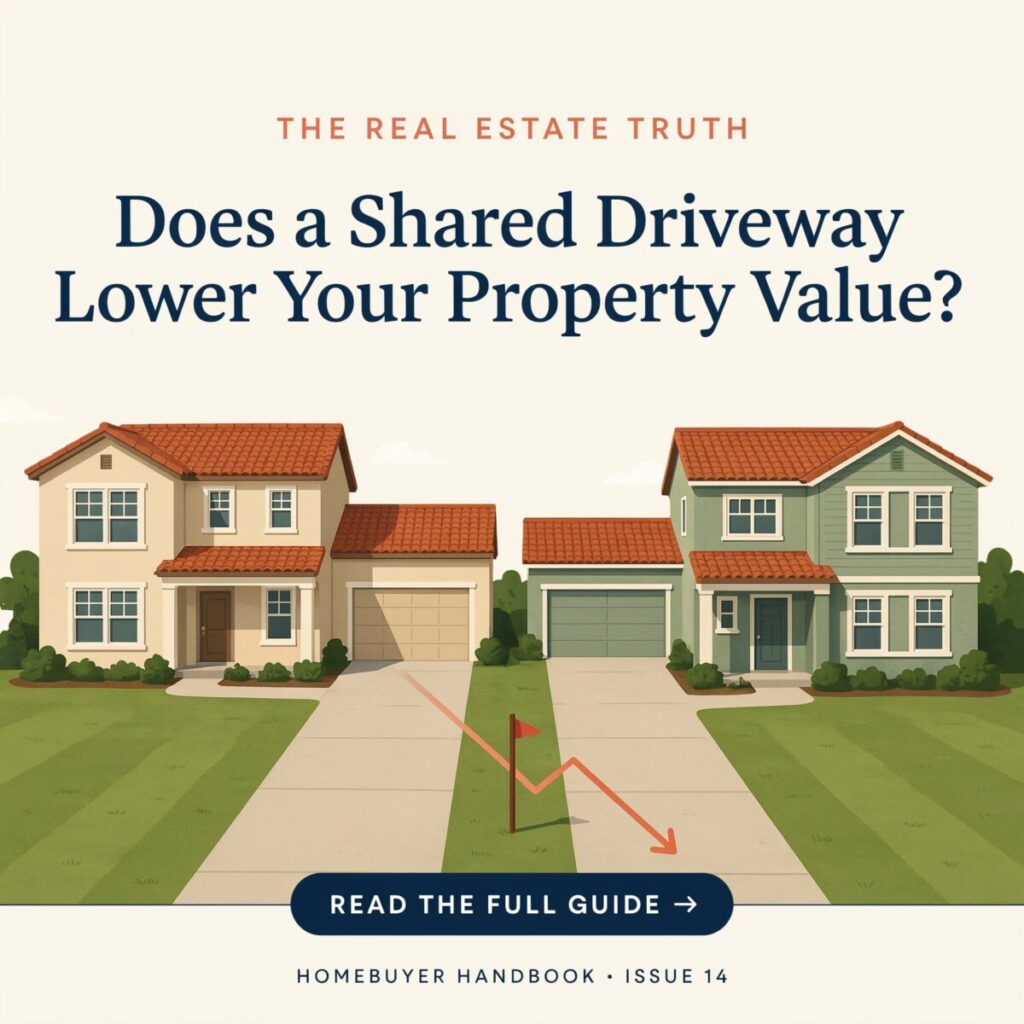
So, does a shared driveway lower property value? The short answer is: not necessarily, but it can if legal and maintenance issues are left unresolved.
A shared driveway in itself does not automatically drag down your home’s price. In many markets, it’s simply a quirk of the lot layout. However, the impact on home value depends entirely on the documentation. If there is a clearly recorded shared driveway easement and a solid driveway access agreement outlining maintenance, buyers and appraisers will likely treat it as a non-issue.
Conversely, if the arrangement is based on a “handshake deal” with the neighbor, or if there is an ongoing neighbor driveway dispute, you could see a negative impact on marketability and appraised value. Let’s dive into how the real estate industry actually views these unique property features.
How Appraisers and Buyers Treat Shared Driveways
When determining a home’s worth, appraisers look at comparable sales (comps), the physical condition of the property, and any encumbrances on the title. When it comes to a real estate appraisal shared driveway, the appraiser’s primary concern is marketability—how easy it will be to sell the home in the future.
The Buyer’s Perspective: Perception is Reality
For many buyers, shared driveway property value concerns stem from a fear of conflict. They worry about parking scarcity, snow removal, and the potential for a neighbor to park an RV right in front of their garage. If a buyer senses friction or ambiguity, they may lower their offer to account for the perceived risk, or walk away entirely. According to the National Association of Realtors (NAR), buyers are increasingly risk-averse regarding properties with ambiguous boundary lines or unrecorded easements.
The Appraiser’s Perspective: Show Me the Paperwork
Appraisers are trained to look for functional utility and legal access. If a home relies on a shared driveway to access the street or a garage, the appraiser will check the title report for a recorded shared driveway easement (sometimes called a driveway servitude in states like Louisiana).
If the easement is properly recorded and outlines who owns what portion of the land, the appraiser will likely make no negative adjustment. However, if the driveway crosses a property line without a recorded agreement, the appraiser must flag it. Unresolved legal ambiguity can lead to an “extraordinary assumption” in the appraisal report, which can spook lenders and ultimately lower the appraised value.
Furthermore, underwriting guidelines from entities like Fannie Mae require that a property have safe, year-round access. If a shared driveway is the only access to the home, and there’s no legal right to use it, a lender might refuse to fund the mortgage until a legal rights driveway easement is formally established. This financing hurdle can severely limit your buyer pool, indirectly lowering your property value.
Key Factors That Influence Value
Not all shared driveways are created equal. The actual shared driveway pros and cons depend heavily on several key variables. Here is what dictates whether a boundary driveway shared with a neighbor will hurt, help, or have zero effect on your bottom line.
- Legal Clarity (Recorded Easement vs. Informal Arrangement): This is the single biggest factor. A recorded shared driveway easement “runs with the land,” meaning it binds all future owners. An informal “gentleman’s agreement” between current neighbors dies the moment one house is sold. Lack of legal clarity is a massive deterrent for buyers.
- Maintenance Responsibility and Cost-Sharing: Who pays when the asphalt cracks or the snow plow breaks the mailbox? A formal driveway access agreement should explicitly state the shared driveway maintenance cost split (e.g., 50/50, or proportional to usage). If this isn’t documented, buyers will fear being stuck with the entire bill.
- Privacy, Convenience, and Parking Scarcity: In dense urban areas where street parking is scarce, a shared driveway can actually be a premium feature. However, if the shared space is too narrow for two cars to pass, or if neighbors constantly block each other, convenience drops and so does the home’s appeal.
- Curb Appeal and First Impressions: Driveways and curb appeal are deeply intertwined. A cracked, weed-choked shared driveway reflects poorly on both homes. On the flip side, a well-maintained shared driveway with clear landscaping dividers can look intentional and upscale.
- Local Market Norms and Zoning: In historic districts or dense metro areas (like Boston, Philadelphia, or parts of Los Angeles), shared driveways or party wall / boundary maintenance setups are the norm. Buyers in these markets expect it, so the impact on home value is negligible. In sprawling rural areas, however, it might be viewed as an oddity.
- Emergency Vehicle Access: Local zoning and setback driveway rules often dictate minimum widths for emergency vehicle access. If a shared driveway is too narrow for a fire truck, it could violate local codes, creating a massive liability and devaluing the property until it’s fixed.
Real Estate Examples and Case Studies
To understand the real-world impact on home value, let’s look at three hypothetical scenarios based on common market patterns.
Scenario 1: The Documented Urban Townhome (Neutral/Positive Impact)
- The Situation: Two townhomes in Philadelphia share a narrow rear driveway leading to detached garages.
- The Setup: The seller provides a 10-year-old recorded shared driveway easement and a maintenance agreement showing a 50/50 cost-sharing schedule for repaving and snow removal.
- The Outcome: The buyer’s agent reviews the docs, the appraiser notes the clear legal access, and the home sells at full asking price. The shared driveway property value impact is 0%. The guaranteed off-street parking is a major selling point.
Scenario 2: The Suburban Handshake Deal (Negative Impact)
- The Situation: A suburban home in Ohio shares a long, winding driveway with the neighboring property to reach the main road.
- The Setup: There is no recorded easement. The current owners have a verbal agreement, but the neighbor frequently parks boat trailers on the shared section, causing a neighbor driveway dispute.
- The Outcome: A buyer falls in love with the house but their lender requires a legal rights driveway easement to approve the loan. The neighbor refuses to sign one without a $10,000 payout. The buyer walks away. The seller eventually sells to a cash buyer at a 5% to 7% discount below market value due to the legal headache.
Scenario 3: The Proactive Fix (Mitigated Impact)
- The Situation: A charming cottage shares a driveway, and the asphalt is crumbling.
- The Setup: Before listing, the seller hires a real estate attorney to draft a driveway access agreement and splits the $4,000 repaving cost with the neighbor. Both parties record the agreement.
- The Outcome: Instead of hiding the issue, the seller markets the “brand new, fully documented shared driveway.” The home sells slightly faster than average, proving that resolving issues upfront protects your asking price.
Legal and Practical Steps to Protect Value
If you own a home with a shared driveway, or are looking to buy one, you don’t have to leave your equity to chance. Here are the proactive steps you can take.
For Sellers: Get Your Paperwork in Order
Before you even think about staging your home, consult a local real estate attorney. Have them draft and record a formal shared driveway easement and maintenance agreement. This document should cover exact boundary lines, shared driveway maintenance cost splits, rules regarding parking/storage, and a dispute resolution clause (like mandatory mediation). Additionally, order a preliminary title report to check for any existing encumbrances.
For Buyers: Do Your Due Diligence
Never take a seller’s word that “we’ve shared it for 20 years with no problems.” Ask your agent to request a copy of the recorded easement, the property survey to verify the driveway doesn’t encroach on other lots, and any existing HOA rules. Consider adding an easement contingency to your offer, allowing you to back out or demand the seller legally formalize the access before closing.
Practical Curb Appeal Upgrades
You can’t change the property line, but you can change the vibe. Installing a low-profile landscape divider, such as a row of ornamental grasses or cobblestone pavers down the center, visually separates the space and improves driveways and curb appeal. It signals to buyers that the space is well-managed.
When a Shared Driveway Might Increase Value
It sounds counterintuitive, but can a shared driveway actually boost your home’s worth? In specific scenarios, the answer is yes.
- Efficient Land Use in Dense Markets: In high-cost areas like San Francisco or Brooklyn, land is at a premium. A shared driveway allows homeowners to maximize the square footage of the actual house and yard. Buyers in these markets value usable living space over private pavement.
- Cost Savings on Major Repairs: Paving a new driveway can cost anywhere from $3,000 to $10,000+. When you have a formal cost-sharing schedule and escrow for repairs with a neighbor, you effectively cut your long-term property maintenance costs in half.
- Shared Amenities: Some neighbors with shared driveways pool their resources to hire premium services, such as weekly heated snow-melting systems, high-end landscape lighting, or private security patrols. These shared amenities elevate the perceived luxury of the property.
Insurance, Liability & Selling Tips
Shared driveway insurance liability is a frequently overlooked aspect of property ownership that can spook detail-oriented buyers. If a guest slips on the ice of a shared driveway, or if a delivery driver damages the pavement, who is liable?
Clarify Insurance Coverage: Homeowners should speak with their insurance agents to ensure their liability coverage extends to the shared easement area. Proactively providing this information to a buyer shows transparency.
Master the Disclosure: Real estate disclosure laws vary wildly by state. In strict disclosure states, failing to mention an unrecorded shared usage can lead to post-sale lawsuits. Always over-disclose. Provide all maintenance records, agreements, and survey maps in a neat “Property Binder” for prospective buyers.
Stage the Driveway: When hosting open houses, ensure the shared driveway is swept, edged, and completely clear of cars. First impressions matter, and a clean, unobstructed shared space minimizes buyer anxiety.
Conclusion & Actionable Takeaway
So, does a shared driveway lower property value? Only if you let it. While a shared driveway can introduce complexities regarding privacy, maintenance, and legal access, it is not an automatic dealbreaker. The true impact on home value hinges entirely on documentation, local market norms, and curb appeal. By replacing vague handshake agreements with ironclad legal documents, and maintaining the space with pride, you can neutralize the risks and confidently sell or buy a home with shared access.
Seller Checklist:
- [ ] Hire an attorney to draft/record a shared driveway easement.
- [ ] Create a written maintenance and cost-sharing agreement.
- [ ] Order a property survey to confirm boundaries.
- [ ] Upgrade landscaping to visually define the shared space.
- [ ] Prepare a disclosure binder with all relevant documents.
Buyer Checklist:
- [ ] Review the title report for recorded easements or driveway servitudes.
- [ ] Request the property survey and check for encroachments.
- [ ] Ask about the shared driveway maintenance cost history.
- [ ] Verify local zoning and setback driveway rules for emergency access.
- [ ] Clarify shared driveway insurance liability with your agent.
Frequently Asked Questions (FAQ)
Who is responsible for a shared driveway?
Responsibility is dictated by the recorded shared driveway easement or driveway access agreement. If no legal document exists, local state laws regarding prescriptive easements or boundary driveway shared maintenance may apply, but this often requires legal mediation to determine cost splits for repairs and snow removal.
Can a shared driveway be sold separately?
Generally, no. A shared driveway easement “runs with the land,” meaning it is tied to the properties it serves. You cannot typically sell the physical driveway strip to a third party without severing the legal access to the homes, which would violate zoning laws and destroy the properties’ marketability.
Do you have to disclose a shared driveway when selling?
In most U.S. states, yes. Material facts that affect a property’s value or desirability must be disclosed. Even in states with looser disclosure laws, failing to disclose an unrecorded shared usage or an ongoing neighbor driveway dispute can lead to severe legal repercussions post-sale.
Will a shared driveway lower my home appraisal?
Not inherently. Appraisers look for legal, year-round access. If a real estate appraisal shared driveway review shows a properly recorded easement and clear maintenance terms, the appraiser will likely make no negative adjustment. Value is only lowered if there are unresolved legal disputes or lack of legal access.
What is a driveway servitude?
A “driveway servitude” is simply the legal term used in certain states (most notably Louisiana, which follows civil law rather than common law) for what the rest of the U.S. calls an easement. It grants one property the legal right to use a portion of another property’s land for access.