
You’re scrolling through online listings, dreaming of your first home, when a property catches your eye. The price is surprisingly affordable, the photos look decent, and the location is perfect. But then you spot a phrase in the listing description that makes your stomach drop: “Sold as-is.”
For a first-time homebuyer, seeing this phrase can feel incredibly intimidating. It conjures up images of crumbling foundations, leaking roofs, and endless money pits. You might wonder if you are signing away your rights or agreeing to buy a teardown.
But before you scroll past that listing, take a deep breath. Understanding the true sold as-is meaning is the first step toward deciding if this property is a hidden gem or a financial nightmare. In this guide, we will break down exactly what an as-is home sale entails, what your rights are regarding inspections and disclosures, and the potential financing hurdles you might face. By the end, you’ll have the knowledge you need to confidently navigate an as-is real estate contract and protect your biggest investment.
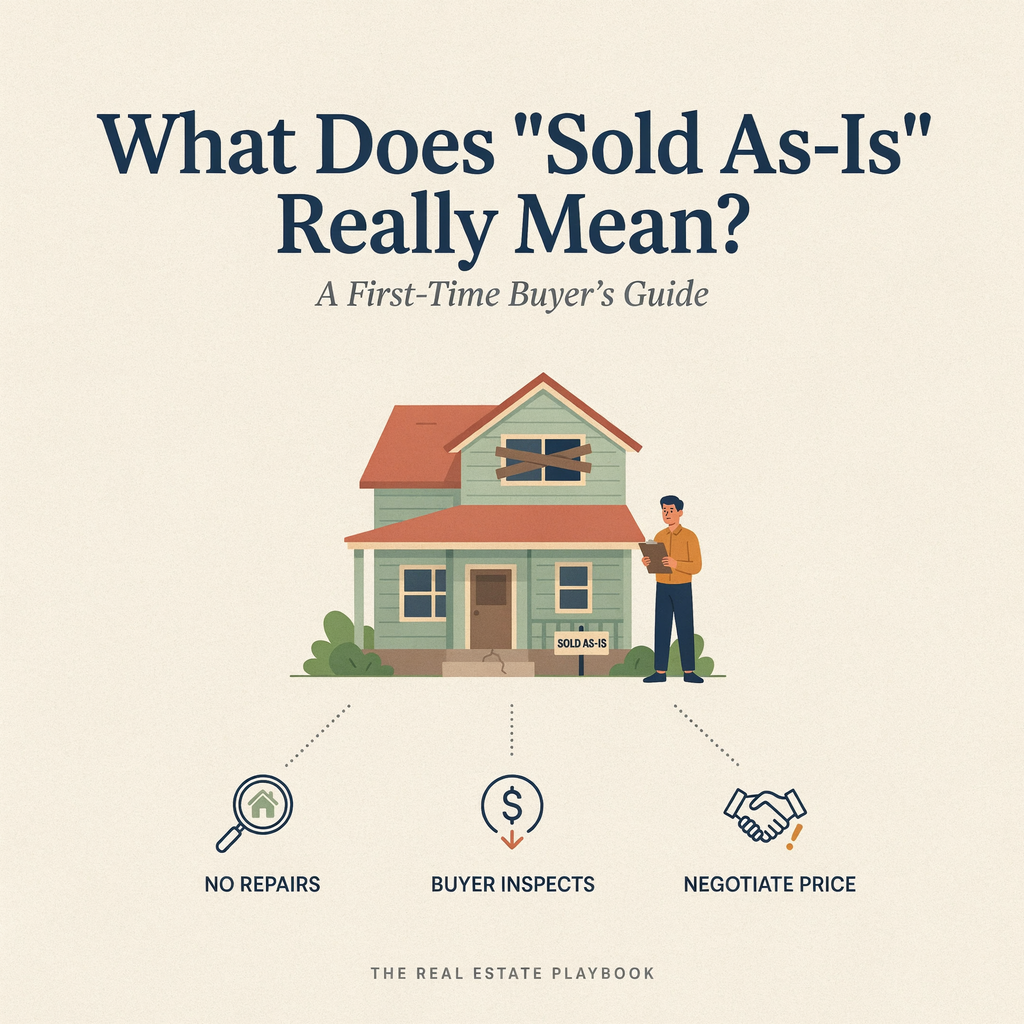
What Does “Sold As-Is” Mean in Real Estate?
At its core, when a house is listed as an as-is property, it simply means the seller is offering the home in its exact current condition. The seller is making an upfront declaration that they will not be making any repairs, upgrades, or improvements before handing over the keys.
In a standard real estate transaction, a buyer might ask the seller to fix a leaky faucet or replace a broken window after the inspection. In an as-is home sale, the seller generally refuses these requests. They will not offer repair credits or reduce the sale price to cover the cost of fixes identified during the due diligence period.
However, it is crucial to understand that “as-is” does not automatically mean the house is unlivable, condemned, or structurally unsafe. Many as-is homes are perfectly fine but are being sold by owners who simply lack the time, money, or desire to manage renovation projects.
What “As-Is” Does Not Mean
There are several dangerous misconceptions surrounding buying a house as-is. Let’s clear them up immediately:
- It does not eliminate your right to inspect the home: You are still fully entitled to hire professionals to evaluate the property.
- It does not erase seller disclosure requirements: While laws vary significantly by state, an as-is clause does not give a seller a free pass to intentionally hide known material defects. If the seller knows the basement floods every spring, they generally still have to tell you.
- It does not mean you must waive every contingency: You can still include financing and appraisal contingencies in your real estate purchase agreement to protect your earnest money deposit.
Ultimately, the phrase “sold as-is” dictates the seller’s willingness to fix things, not the buyer’s right to investigate what they are buying. Contract language and local state laws will always dictate your specific buyer protections.
Why Do Sellers List Homes As-Is?
Sellers choose to list homes as-is for a wide variety of reasons, and it rarely means they are trying to pull a fast one on an unsuspecting buyer. Common scenarios include:
- Estate Sales and Inherited Property: The heirs may live out of state and have no idea what condition the home is in, nor do they want to manage repairs.
- Foreclosures and Bank-Owned Homes: Banks and institutional investors want to liquidate assets quickly and will not invest money into fixing up a repossessed house.
- Divorce or Relocation: The sellers need to liquidate the asset quickly and move on with their lives without dealing with contractor bids.
- Financial Hardship: The seller may not have the cash to make necessary repairs before selling.
- Investor or Rental Properties: A landlord who is tired of managing a property may just want to sell it to the next investor without prepping it for a retail buyer.
In these situations, the seller’s priority is a fast, hassle-free closing, which is why they price the home accordingly and refuse to negotiate repairs.
Can You Inspect an As-Is Home?
Absolutely. In fact, getting a thorough home inspection report is the single most important thing you can do when buying an as-is home.
There is a massive difference between inspecting a home and expecting the seller to repair it. When you include a home inspection contingency in your offer, you are giving yourself a window of time to investigate the property. If the inspector finds major issues—like a failing roof, outdated electrical wiring, severe water damage, or a cracked foundation—you have the right to walk away and get your earnest money back.
Because you won’t be asking the seller to fix anything, you must be incredibly thorough. Beyond the general inspection, consider specialized inspections:
- Roof and Foundation: To check for structural integrity and signs of shifting.
- Sewer Scope: To ensure the main line isn’t collapsed or blocked by tree roots.
- HVAC, Electrical, and Plumbing: To check for outdated, inefficient, or unsafe systems.
- Pest, Radon, and Mold: To check for environmental and biological hazards.
- Well and Septic: Crucial if the home is not connected to municipal utilities.
For a first-time buyer, an inspection transforms an unknown risk into a calculated financial decision.
Inspection Contingency vs. Waiving Inspections
It is vital to understand the difference between buying a home “as-is” and waiving your inspection contingency. Agreeing to buy a house as-is means you accept its current condition and won’t ask for repairs. Waiving an inspection contingency means you are buying the house blind, without the right to investigate or back out based on the home’s physical condition.
If you waive the inspection and later discover the house needs $40,000 in major repairs, you are on the hook for those costs. Worse, if you try to back out without a valid contractual reason, you will likely lose your earnest money deposit.
Here is how the different scenarios compare:
| Scenario | Right to Inspect? | Can Ask for Repairs? | Can Back Out if Major Defects are Found? | Risk Level |
|---|---|---|---|---|
| Standard Sale | Yes | Yes | Yes (Retain Earnest Money) | Low |
| As-Is Sale with Inspection Contingency | Yes | No (Usually) | Yes (Retain Earnest Money) | Medium |
| As-Is Sale with Waived Inspection | No (or for info only) | No | No (Risk Losing Earnest Money) | High |
For most first-time buyers, keeping the inspection contingency—even in an as-is deal—is the smartest way to protect your finances.
Seller Disclosures: What Sellers Still Must Tell You
Even in an as-is sale, seller disclosure requirements still apply in most states. Sellers are legally obligated to disclose known material facts and hidden home defects that could affect the property’s value or safety. An as-is addendum does not grant a seller immunity from fraud or intentional concealment.
When you enter the due diligence period, carefully review the seller’s property disclosure statement. Look for mentions of past insurance claims, unpermitted additions, neighborhood nuisances, or ongoing disputes. You should also request any available maintenance records, permit history, and HOA documents.
If you suspect the seller is hiding something, or if the disclosure form seems suspiciously blank, lean heavily on your real estate agent. In complex situations, or if you are buying a heavily distressed property, consulting a local real estate attorney can provide an extra layer of protection and ensure your rights are upheld under state law.
Common Problems Found in As-Is Homes
Because as-is homes are often sold by estates, banks, or financially strapped owners, deferred maintenance is incredibly common. When reviewing your home inspection report, keep an eye out for these frequent issues:
- Roof Leaks and Aging Shingles: A full roof replacement can cost upwards of $10,000.
- Foundation Cracks and Settling: Structural issues are among the most expensive major repairs a buyer can face.
- Outdated Electrical Wiring: Knob-and-tube or aluminum wiring can be a fire hazard and may require a full rewiring of the house.
- Plumbing and Water Damage: Polybutylene pipes, cast iron sewer lines, or chronic moisture can lead to mold and rot.
- Aging HVAC Systems: Furnaces and AC units over 15 years old are likely nearing the end of their lifespan.
- Code Violations and Unpermitted Work: DIY renovations done without city approval can cause massive headaches during a home appraisal or when you eventually try to sell.
Before making an offer, get rough contractor quotes for the most glaring issues. This allows you to accurately budget your renovation costs and decide if the deal still makes financial sense.
Financing an As-Is Home: What First-Time Buyers Need to Know
Financing can be the biggest hurdle when buying a house as-is. Lenders want to ensure their collateral is safe, sound, and structurally secure. If a home has severe health or safety hazards, it may not pass the home appraisal required for your mortgage.
- FHA Loan Requirements: The Federal Housing Administration has strict minimum property standards. If the as-is home has peeling paint (in homes built before 1978), a damaged roof, or missing handrails, the FHA appraiser will flag it. Because the seller won’t make repairs, the FHA loan may fall through.
- VA Loans: Similar to FHA, VA loans require the home to be move-in ready and free of major safety hazards.
- Conventional Loan: While slightly more lenient than government-backed loans, conventional lenders still require the home to be habitable and free of severe structural defects.
If the property fails the appraisal due to its condition, you may be forced to switch to a specialized renovation loan (like the FHA 203k or Fannie Mae HomeStyle), pay for the repairs out of pocket before closing, or buy the home with cash. Always discuss the specific condition of the home with your lender before removing your financing contingency.
Pros and Cons of Buying a House As-Is
Is an as-is home right for you? Weighing the advantages and disadvantages is critical for any first-time homebuyer.
The Pros
- Lower Purchase Price: As-is homes are often priced below market value to account for their condition.
- Less Competition: Many buyers are scared off by the “as-is” label, giving you more negotiating power.
- Instant Equity: If you buy at a discount and put in the sweat equity to renovate, you can build significant wealth.
- Faster Closing: Without haggling over repair credits and waiting for contractors, the path to the closing table is often smoother.
The Cons
- High Out-of-Pocket Costs: You must have the cash reserves to handle major repairs immediately after closing.
- Financing Obstacles: Strict loan requirements can derail your mortgage approval.
- Hidden Defects: Even with an inspection, older homes can hide expensive surprises behind the drywall.
- Stress and Time: Managing contractors and renovations requires significant time and emotional energy.
How to Protect Yourself When Buying an As-Is Home
If you decide to move forward with an as-is offer, use this step-by-step checklist to protect yourself:
- Read the Purchase Agreement: Understand exactly what the as-is real estate contract stipulates regarding your right to cancel.
- Hire an Experienced Agent: Work with a real estate agent who has extensive experience with as-is, foreclosure, or estate sales.
- Get a Professional Inspection: Never skip the general home inspection, and spring for specialized scopes if the house is older.
- Review Disclosures and Permits: Verify that any major additions or renovations were done legally.
- Get Repair Estimates: Bring in licensed contractors to bid on necessary work before your contingency period expires.
- Confirm Financing: Ensure your lender approves the property’s condition for your specific loan type.
- Keep an Emergency Fund: Do not spend all your cash on closing costs and the down payment; keep a buffer for immediate repairs.
- Title Search and Insurance: Ensure there are no liens on the property and secure a robust homeowner’s insurance policy.
- Know When to Walk Away: If the repair costs outweigh the discount, be prepared to let the house go.
Should a First-Time Buyer Purchase an As-Is Home?
There is no one-size-fits-all answer. An as-is home can be a fantastic opportunity for a first-time homebuyer who has a healthy emergency fund, some DIY or renovation experience, a flexible timeline, and access to reliable contractors. It can be a great way to enter an expensive housing market at a lower price point.
However, it can be incredibly risky if you are stretching your budget to the absolute limit, relying on a low-down-payment loan, or lack the cash reserves to handle a sudden HVAC failure or plumbing disaster. If the thought of managing contractors makes you anxious, or if you need to move in immediately without dealing with dust and debris, a move-in ready home is likely a much safer choice for your first purchase.
FAQ
Does “sold as-is” mean I cannot negotiate?
No. You can still negotiate the initial purchase price. Furthermore, if your inspection reveals massive defects, you can try to negotiate a lower price, though the seller is under no obligation to agree. If they refuse, you can usually walk away (if you have an inspection contingency).
Can I back out after inspecting an as-is home?
Yes, provided you are still within your due diligence period and have not waived your home inspection contingency. If you find issues you aren’t comfortable with, you can cancel the contract and typically get your earnest money back.
Is buying an as-is home always a bad idea?
Not at all. Many as-is homes are structurally sound and simply need cosmetic updates. They can be excellent investments for buyers willing to put in a little work.
Do as-is homes cost less?
Generally, yes. Sellers price as-is homes to reflect their current condition and the fact that they will not be offering repair credits. However, you must factor in the cost of future repairs to see if it’s truly a deal.
Can I get an FHA loan on an as-is home?
You can, but it is challenging. The home must still meet strict FHA loan requirements for safety and habitability. If the appraisal flags health or safety hazards, the loan will not be approved unless the issues are resolved prior to closing.
Should I waive the inspection contingency to make my offer more competitive?
For most first-time buyers, waiving the inspection is highly discouraged. The risk of uncovering tens of thousands of dollars in hidden structural damage far outweighs the benefit of making your offer look slightly more attractive to the seller.
Final Thoughts
Ultimately, the sold as-is meaning boils down to this: the seller is handing over the keys in the home’s current state, and you are accepting the responsibility for its future. It does not mean you should skip your due diligence, ignore your budget, or blindly trust the listing photos.
An as-is home can be a brilliant stepping stone into homeownership, offering lower prices and instant equity potential. But it requires a clear-eyed approach. Inspect the property thoroughly, budget realistically for the inevitable surprises, and lean on your real estate team for guidance. Remember, this guide is for informational purposes; always consult a licensed local real estate agent, attorney, or lender for transaction-specific guidance.
If the numbers make sense and you are prepared for the work, that “as-is” listing might just turn into your perfect dream home. If the risks outweigh the rewards, don’t be afraid to walk away and wait for the right opportunity.