
You Agreed on a Price. Then the Appraisal Ruined Everything.
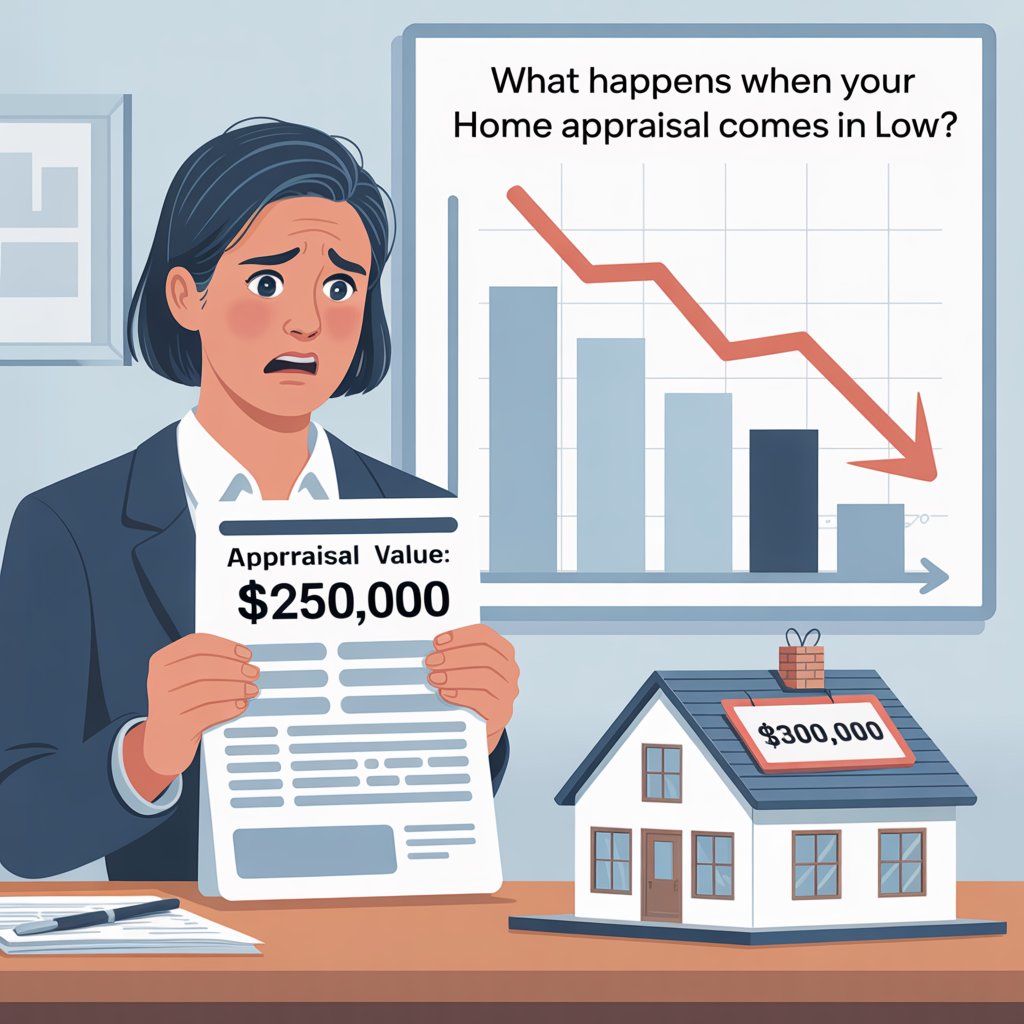
You’ve spent months house-hunting, finally found “the one,” and signed a purchase agreement at $420,000. The seller is thrilled. You’re mentally picking out paint colors. Then the lender’s appraiser visits — and values the home at $390,000. Suddenly, there’s a $30,000 hole in your financing, the seller is digging in their heels, and closing day feels a million miles away.
If your home appraisal comes in low, you’re not alone. Low appraisals have become more common in volatile markets where contract prices can outpace recent comparable sales. According to the S&P CoreLogic Case-Shiller Index, national home prices have seen significant swings in recent years, creating exactly the conditions where appraised values and buyer expectations diverge.
The good news? A low appraisal doesn’t have to kill your deal. This guide walks you through exactly what a low appraisal means, why it happens, and the concrete low appraisal options available to buyers, sellers, and refinancers. You’ll learn how to dispute errors, negotiate smartly, and — when necessary — walk away with your finances intact.
What Is a Home Appraisal — and Why Does It Matter?
A home appraisal is an independent, professional opinion of a property’s market value, performed by a licensed or certified appraiser. The appraiser’s job is to protect the lender — not the buyer or seller — by confirming the home is actually worth the amount being borrowed against it.
Appraisal vs. Home Inspection vs. Market Value
It’s easy to confuse these three concepts, but they serve very different purposes:
- Appraisal: Determines the property’s value for lending purposes, using recent comparable sales (comps), condition, location, and market trends.
- Home inspection: Evaluates the physical condition of the home — roof, plumbing, electrical, foundation — but does not assign a dollar value.
- Market value: What a willing buyer would pay a willing seller in an open market. An appraisal is one estimate of market value, but not the only one.
The Appraisal’s Role in Mortgage Underwriting
When you apply for a mortgage or a low appraisal refinance, the lender uses the appraised value to calculate your loan-to-value (LTV) ratio. If the appraisal is lower than the purchase price, the lender will base the loan on the lower number. That’s why a mortgage appraisal low result can suddenly change how much cash you need to bring to closing — or whether the loan is approved at all.
For refinancing, the appraisal determines whether you qualify for better rates, can remove private mortgage insurance (PMI), or can access cash through a cash-out refinance.
Why Appraisals Come in Low — Common Causes
A low appraisal rarely comes out of nowhere. Here are the most frequent reasons an appraisal comes in low in the US market:
- Outdated or poorly chosen comps. The appraiser may have used sales from six months ago, or homes in a different neighborhood that aren’t truly comparable. In fast-moving markets, even 90-day-old data can lag behind actual prices.
- Rapid market shifts. If home prices surged between the time you signed the contract and the appraisal date, the appraiser’s data may not reflect current conditions.
- Property condition issues. Deferred maintenance, outdated kitchens, worn roofs, or visible defects can drag the value down — even if the bones of the home are solid.
- Poor curb appeal. First impressions matter. Overgrown landscaping, peeling paint, or a cluttered yard can influence an appraiser’s overall assessment.
- Unique features that limit comps. Custom homes, unusual lot shapes, rural properties, or homes with atypical layouts are harder to value because there are fewer direct comparisons.
- Limited local sales data. In rural or low-turnover neighborhoods, appraisers may have to reach far afield for comps, weakening the accuracy of their estimate.
- Appraisal bias or errors. Appraisers are human. Appraisal bias, data-entry mistakes (wrong square footage, missing bathrooms, incorrect lot size), and misapplied adjustments can all produce an artificially low number.
- Over-aggressive contract pricing. Sometimes the agreed price simply is higher than what the market supports — particularly in bidding wars where buyers waived contingencies to win.
Remember: the appraiser’s opinion is just that — an opinion. It’s informed by data, but two qualified appraisers can look at the same property and arrive at different values.
Immediate Consequences of a Low Appraisal for Buyers, Sellers, and Refinancers
When the home appraisal under contract comes in below the agreed price, the financial math breaks down fast. Here’s what each party faces:
For Buyers
- The lender won’t loan the full amount. Your mortgage is calculated on the appraised value, not the contract price. A $30,000 gap may mean you need to bring that much extra cash to closing.
- Your down payment effectively increases. If you planned a 20% down payment on a $420,000 home, you now need 20% plus the gap to make the deal work.
- The deal may fall through. If you can’t cover the gap and the seller won’t budge, you may need to exercise your appraisal contingency and walk away — hopefully with your earnest money intact.
For Sellers
- Fewer qualified buyers. Any new buyer will likely face the same appraisal problem, shrinking your pool.
- Pressure to lower the price. Buyers will expect you to close the gap, especially in a cooling market.
- Delayed closing. Rebuttals, second appraisals, and renegotiation all add weeks to your timeline.
For Refinancers
A low appraisal refinance scenario creates specific headaches:
- LTV problems. If you wanted to drop PMI by reaching 80% LTV, a low appraisal keeps your LTV higher.
- Higher interest rates. Some rate tiers depend on LTV; a lower appraisal could push you into a more expensive bracket.
- Cash-out denial. If the appraisal doesn’t support the loan amount you need, your cash-out refi may be rejected outright.
The Role of Contingency Clauses
- Appraisal contingency: Gives the buyer the right to renegotiate or exit the contract if the appraisal is below the purchase price.
- Financing contingency: Protects the buyer if they can’t secure a loan — often triggered by a low appraisal.
Without these contingencies (common in competitive markets where buyers waived them), the buyer is on the hook to cover the gap or risk losing their earnest money deposit.
Your Options When the Appraisal Is Low — Step-by-Step Actions
A low appraisal feels like a wall. It’s actually a fork in the road. Here are your low appraisal options, in the order you should consider them.
Step 1: Get and Review the Full Appraisal Report
Under the Equal Credit Opportunity Act (ECOA), you’re entitled to a copy of the appraisal. Read it line by line. Check for:
- Factual errors: wrong square footage, bedroom/bathroom count, lot size, year built, or missing amenities (pool, finished basement, solar panels).
- Poor comp selection: comps that are too far away, too old, not similar in condition, or in a different school district.
- Adjustment errors: did the appraiser under-adjust for your home’s upgrades or over-adjust for a comp’s advantages?
Step 2: Request a Reconsideration of Value (ROV)
A reconsideration of value — sometimes called an appraisal appeal or appraisal dispute — is a formal request to the appraiser to re-examine their work. This is one of the most powerful appraisal problem solutions available.
- Work with your real estate agent to compile better comps — recent, nearby, truly comparable sales that support a higher value.
- Provide documentation of upgrades, permits, and improvements.
- Submit the request through your lender (borrowers typically cannot contact the appraiser directly due to independence rules).
Step 3: Negotiate the Gap
If the appraisal holds, it’s time to negotiate. The appraisal gap can be handled in several ways:
- Seller reduces the price to match the appraisal.
- Buyer brings additional cash to cover the difference.
- Split the difference — each party absorbs half.
- Seller offers a concession (e.g., covering closing costs or buying down the rate) to offset the buyer’s extra cash burden.
Step 4: Ask the Lender About Exceptions or Waivers
In some cases, lenders can request an appraisal waiver from Fannie Mae or Freddie Mac, especially for borrowers with strong credit, low LTVs, or properties with extensive prior appraisal data in the automated underwriting system.
Step 5: Consider a Second Appraisal
If you believe the first appraisal was fundamentally flawed, you can request a second appraisal. This comes at a cost ($300–$700 depending on market and property type) and requires lender approval.
Step 6: Explore Different Loan Programs
Some loan products — particularly FHA and VA loans — have different appraisal rules. VA loans, for example, allow a formal appraisal review through the VA’s Tidewater process. FHA appraisals stay with the property for a set period, which can be a double-edged sword.
Step 7: Walk Away (If You Have the Contingency)
If none of the above work and you have an appraisal contingency, walking away is a legitimate and sometimes wise decision. Protecting your financial future outweighs any single property.
Negotiation Tactics and Sample Scripts
Low appraisal negotiation is where deals are won or lost. The golden rule: lead with data, not emotion. Here are scripts you — or your agent — can adapt.
Seller to Buyer: Proposing a Split
“We understand the appraisal came in at $390,000, leaving a $30,000 gap. We believe in this home and in your offer. We’re prepared to reduce the price by $15,000 and offer a $5,000 closing cost credit, if you’re willing to bring an additional $10,000 to closing. That way we share the burden and keep this deal moving.”
Buyer to Seller: Challenging the Appraisal
“We’ve reviewed the appraisal report and identified three comparable sales in the past 60 days within a half-mile that support a value closer to the contract price. We’d like to formally request a reconsideration of value through the lender. If the revised appraisal still comes in low, we propose meeting halfway at $405,000.”
Agent to Lender: Requesting a Reconsideration
When requesting an ROV, provide:
- At least three comparable sales that are more recent, closer, or more similar than the ones used.
- A clear explanation of why each comp is superior.
- Supporting documentation: permits for renovations, photos of upgrades, MLS records.
- A professional, factual cover letter — never accusatory.
Key Negotiation Principles
- Stay calm and collaborative. The other party is not your enemy.
- Anchor with data. Numbers persuade; feelings don’t.
- Know your walk-away point. Before negotiations start, decide the maximum gap you’re willing to absorb.
- Use your agent. A skilled agent can frame proposals in a way that preserves relationships and keeps both sides engaged.
When to Order a Second Appraisal or Appraisal Review
Not every low appraisal deserves a second opinion. Pursue a second appraisal or formal appraisal review when:
- You’ve identified clear factual errors the original appraiser won’t correct through an ROV.
- You have high-quality, recent comps that were not considered and that materially change the value picture.
- The original appraisal used unusual adjustments or outlier comps that don’t reflect the local market.
- You suspect appraisal bias or discrimination — in which case you can also file a complaint with your state’s appraisal board and the CFPB.
Costs, Timelines, and Lender Rules
- Cost: Typically $300–$700, paid by the borrower (or negotiated with the seller).
- Timeline: 1–3 weeks, depending on appraiser availability.
- Lender rules: Some lenders will only accept an appraisal they ordered themselves. If your lender won’t order a second, you may need to switch lenders — which resets your mortgage timeline.
For VA loans, the Tidewater process allows the appraiser to receive additional comps during the appraisal. For FHA loans, the appraisal is tied to the property’s case number for six months, making a second appraisal harder.
Alternatives: Loan Options, Bridge Financing, and Price Adjustments
If renegotiation fails, creative financing can sometimes save the deal.
- Increase your down payment. The simplest solution — if you have cash reserves.
- Bridge financing. A short-term loan that covers the gap, typically repaid when you sell an existing home or refinance. Useful but adds cost and complexity.
- Seller concessions. The seller pays a portion of your closing costs or buys down your interest rate, freeing up cash to cover the gap.
- Piggyback loans (80/10/10 or 80/15/5). A second mortgage covers part of the gap, avoiding PMI while keeping the first mortgage at 80% LTV.
- FHA or VA alternatives. FHA loans allow as little as 3.5% down, which can absorb a portion of the gap. VA loans offer 100% financing for eligible veterans.
- Cash-out refinance later. Buy now at the higher effective cost, then refinance once the property’s value catches up.
Each option affects your closing costs, monthly payments, and potentially your mortgage insurance requirements. Consult your loan officer before committing.
Case Study: The $420,000 Home That Appraised at $390,000
The situation: Sarah and Mark contracted to buy a 3-bedroom home for $420,000. They planned a 20% down payment and a conventional 30-year fixed mortgage. The appraisal came in at $390,000.
The math:
- Agreed mortgage at contract price (80% of $420k): $336,000
- Maximum mortgage based on appraisal (80% of $390k): $312,000
- Appraisal gap: $24,000 in loan shortfall, plus the 20% down payment still applies to the contract price.
Their options:
- Walk away (using their appraisal contingency).
- Seller drops price to $390,000 (seller loses $30k in equity).
- Buyer covers the full $30,000 gap in cash.
- Split the gap and negotiate.
The outcome: The seller, motivated to avoid re-listing, reduced the price by $10,000 (to $410,000). Sarah and Mark brought an additional $14,000 in cash to closing. Both parties absorbed some pain, the loan was approved at the revised numbers, and the deal closed 18 days later than originally planned.
The lesson? Flexibility and data-driven negotiation saved a deal that could easily have collapsed.
Preventive Tips for Future Appraisals
Whether you’re selling, buying, or refinancing, you can influence appraisal outcomes before they happen.
- Document every upgrade. Keep receipts, permits, and before/after photos for renovations. A new HVAC, finished basement, or kitchen remodel only counts if the appraiser knows about it.
- Boost curb appeal. Mow the lawn, trim hedges, paint the front door. Small investments yield outsized first-impression returns.
- Make minor repairs. Leaky faucets, cracked windows, and peeling paint signal deferred maintenance — even if the home is structurally sound.
- Prepare a “comps packet.” Your agent can compile recent, relevant comparable sales and hand them to the appraiser at the property visit. Appraisers aren’t required to use them, but they often do.
- Verify public records. Ensure your home’s square footage, bedroom count, and lot size are accurately recorded with the county assessor.
- Time your listing. If possible, list when recent comps support your target price, not during seasonal dips.
- Work with a local, experienced agent. An agent who understands your micro-market can price strategically and guide the appraiser toward the most relevant data.
Your Low Appraisal Action Checklist
Print this out or screenshot it. These are your immediate next steps when the appraisal comes in low:
- [ ] Request the full appraisal report from your lender (you’re legally entitled to it).
- [ ] Review every line — square footage, room count, lot size, year built, comps used.
- [ ] Identify factual errors and flag them immediately.
- [ ] Compile better comps with your agent — recent, nearby, similar-condition sales.
- [ ] Submit a Reconsideration of Value (ROV) through your lender with supporting data.
- [ ] Discuss the gap with the other party — negotiate using data, not emotion.
- [ ] Explore financing alternatives — increased down payment, seller concessions, bridge loans.
- [ ] Request an appraisal waiver inquiry from your lender (Fannie Mae/Freddie Mac).
- [ ] Evaluate a second appraisal if the first was clearly flawed.
- [ ] Know your walk-away point — and use your appraisal contingency if needed.
Don’t Navigate a Low Appraisal Alone
A low home appraisal is stressful — but it’s also one of the most solvable problems in real estate. Whether you’re a buyer, seller, or refinancer, the key is to act quickly, lean on data, and keep communication open with your agent and lender.
Your next move: Call your real estate agent or loan officer today and walk through this checklist together. Most appraisal problem solutions have tight timelines — the sooner you start, the more options you have.
For more guidance, explore our resources on selling your home, mortgage basics, home staging tips, and our complete refinancing guide. For official guidelines, visit HUD’s appraisal resources, Fannie Mae’s appraisal policies, and the CFPB’s mortgage toolkit.